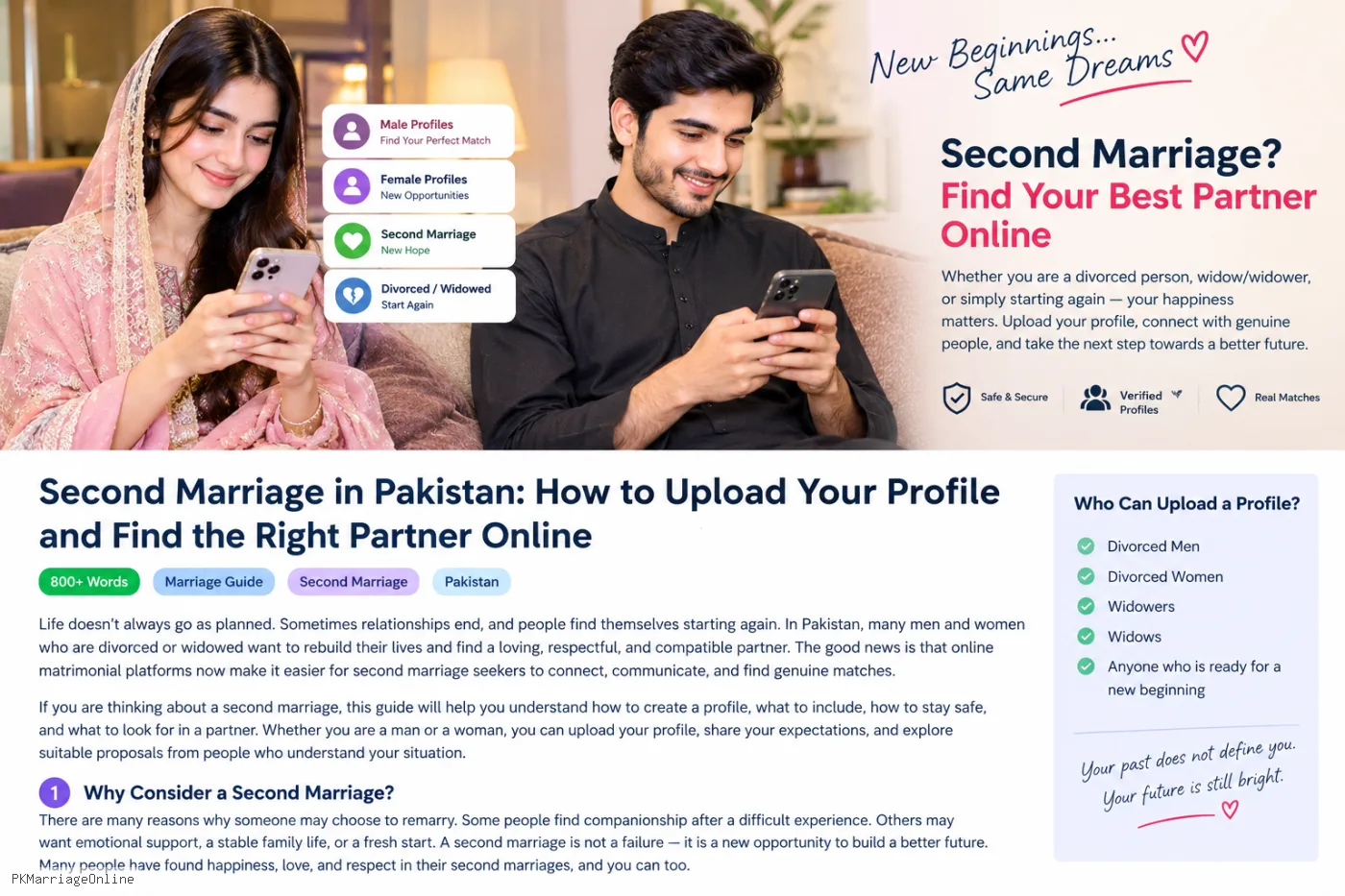
How to Find a Perfect Marriage Partner in Pakistan: Important Things to Know Before Saying Yes

How to Find a Perfect Marriage Partner in Pakistan: Important Things to Know Before Saying Yes
Finding a life partner is one of the biggest decisions a person makes. Everyone dreams of having someone who understands their feelings, respects their opinions, supports their goals, and stays beside them during difficult times. However, finding the right person is not always easy.
In Pakistan, marriage is not just a relationship between two individuals. It also brings two families together. Family traditions, cultural values, financial responsibilities, education, and personal expectations can all play an important role in choosing a suitable marriage proposal.
Today, people have more opportunities to find marriage proposals through relatives, friends, social networks, and online matrimonial websites. These options have made the search process more convenient, but they have also created new challenges.
Sometimes people focus too much on appearance, financial status, or family reputation and forget about the qualities that actually help build a successful marriage.
So, how can you find a suitable life partner? What should you check before accepting a proposal? And which mistakes should you avoid?
Let's explore these important questions.
1. Understand What You Really Want in a Life Partner
Before searching for a marriage proposal, take some time to understand your own expectations.
Many people start looking for a partner without knowing what qualities are important to them. As a result, they become confused when they receive multiple proposals.
Make a list of the qualities you consider essential.
For example:
- Honesty and loyalty.
- Good communication skills.
- Respect for family members.
- Emotional maturity.
- Similar religious or cultural values, where important to you.
- Responsible behavior.
- Understanding of financial responsibilities.
- Support for each other's personal goals.
Remember that nobody is perfect. You should distinguish between essential qualities and personal preferences.
For example, having a particular educational degree might be your preference, but honesty and respect may be much more important for a peaceful married life.
2. Never Choose a Partner Based Only on Appearance
Physical attraction can be a natural part of marriage, but it should not be the only reason for accepting a proposal.
A beautiful photograph or an attractive personality does not tell you everything about someone.
You should also understand how the person behaves with others, handles disagreements, treats family members, and responds to difficult situations.
A person who respects you, listens to your concerns, and communicates honestly may be a much more suitable partner than someone who simply looks impressive.
Attraction can bring two people closer, but mutual understanding and respect help maintain a healthy relationship.
3. Give Importance to Family Background
In Pakistani society, family background is often an important consideration when choosing a marriage proposal.
However, family background should not be judged only through wealth, property, or social status.
Try to understand the family's values, behavior, expectations, and general environment.
Consider the following:
- How do family members treat one another?
- Are they respectful towards others?
- What are their expectations after marriage?
- Do they respect the opinions of both individuals?
- Are there any major family responsibilities that should be discussed?
A supportive family environment can make married life easier.
At the same time, both individuals should have reasonable independence and the ability to make important decisions about their married life.
4. Discuss Financial Expectations Before Marriage
Financial misunderstandings can become a major source of conflict between married couples.
That is why it is important to discuss financial expectations before making a final decision.
You do not need to disclose every private financial detail immediately, but both individuals should have an honest understanding of important responsibilities.
Some useful topics include:
- Current employment or business.
- Financial responsibilities towards parents.
- Monthly household expenses.
- Future savings plans.
- Housing arrangements.
- Career plans after marriage.
- Expectations regarding financial support.
Do not judge someone entirely by their income. Financial responsibility, honesty, and sensible planning are also important qualities.
A couple that communicates openly about money can avoid many unnecessary misunderstandings.
5. Ask Important Questions Before Accepting a Proposal
Many people feel uncomfortable discussing serious topics before marriage. However, these conversations can help both individuals understand whether they are compatible.
Here are some useful questions:
About Personal Life
- What are your hobbies and interests?
- How do you normally spend your free time?
- What makes you happy?
- How do you handle stress?
About Married Life
- What are your expectations from marriage?
- Where would you prefer to live after marriage?
- How should household responsibilities be shared?
- How do you handle disagreements?
About Future Goals
- What are your career ambitions?
- Do you plan to move to another city or country?
- What are your expectations regarding children?
- What kind of lifestyle do you want in the future?
These conversations should be respectful and comfortable. Both individuals should have an equal opportunity to ask questions and express their opinions.
6. Be Careful When Searching for Marriage Proposals Online
Online matrimonial websites have become a popular option for finding suitable marriage proposals.
They allow users to explore profiles, compare preferences, and connect with people from different cities and countries.
However, not every profile is genuine.
Before trusting someone you meet online, take reasonable steps to verify their identity and information.
Here are some important safety precautions:
1. Check whether the person's photographs and information appear genuine.
2. Arrange a video call when appropriate.
3. Verify important personal and family details.
4. Involve trusted family members in the process if both individuals agree.
5. Avoid sending money to someone you have recently met online.
6. Never share passwords, OTPs, or banking information.
7. Avoid sharing sensitive photographs or documents with strangers.
Be especially careful if someone repeatedly asks for money, refuses reasonable verification, or pressures you to make a quick marriage decision.
A genuine proposal should allow sufficient time for both individuals and families to understand each other.
7. Do Not Ignore Red Flags
Sometimes people become emotionally attached to a proposal and start ignoring warning signs.
This can lead to serious problems later.
Pay attention if someone:
- Frequently lies about personal information.
- Becomes aggressive during disagreements.
- Tries to control your decisions.
- Disrespects your family.
- Constantly asks for money.
- Hides important information about previous marriages.
- Pressures you to marry immediately.
- Refuses to discuss reasonable questions.
One mistake does not necessarily define a person's entire personality, but repeated dishonest or controlling behavior should be taken seriously.
Do not allow emotional pressure to replace careful judgment.
8. Understand the Importance of Consent
Marriage should always be based on the free and informed consent of both individuals.
In some families, parents and relatives play a major role in selecting marriage proposals. Their advice can be valuable, especially when they have experience and understand family circumstances.
However, family approval should not replace the wishes of the people getting married.
Both individuals should have the opportunity to understand the proposal, ask questions, and make their own decisions without threats or pressure.
A healthy marriage begins with willingness, respect, and mutual understanding.
9. Discuss Living Arrangements After Marriage
One important topic that is sometimes overlooked is where the couple will live after marriage.
In Pakistan, some couples prefer living with parents, while others choose to establish a separate household.
Neither arrangement is automatically suitable for everyone.
Before marriage, discuss:
- Whether you will live with parents or separately.
- How much privacy the couple will have.
- Responsibilities towards parents.
- Household expenses.
- Visiting arrangements with relatives.
- Personal boundaries and family involvement.
Clear expectations can prevent disagreements after marriage.
10. Take Enough Time Before Making the Final Decision
There is no need to rush into marriage simply because a proposal seems attractive.
Take sufficient time to communicate, verify important details, discuss expectations, and involve trusted people.
If you have serious concerns, address them before making a commitment.
For couples considering Nikah in Pakistan, it is also important to understand applicable legal requirements, consent, age requirements, witnesses, and marriage registration procedures. For remote or online Nikah arrangements, consult a qualified family lawyer and authorized Nikah registrar before proceeding.
11. Build Your Marriage on Trust and Communication
Finding a suitable partner is only the beginning. Maintaining a healthy marriage requires continuous effort from both individuals.
Some important habits include:
- Listen to each other carefully.
- Respect different opinions.
- Avoid unnecessary arguments.
- Appreciate each other's efforts.
- Discuss problems instead of hiding them.
- Support each other's goals.
- Maintain healthy boundaries with relatives.
- Be honest about important matters.
No marriage is completely free from challenges. What matters is how both individuals handle those challenges together.
Conclusion: The Right Decision Can Change Your Life
Finding the right marriage partner requires patience, honesty, understanding, and careful consideration.
Do not make your decision based only on beauty, wealth, education, or social reputation. Look beyond appearances and understand the person's character, values, behavior, and future expectations.
Whether you find a proposal through relatives, friends, or an online matrimonial platform, always prioritize safety, compatibility, and mutual consent.
A successful marriage is not about finding a perfect person. It is about finding someone who is willing to build a respectful, supportive, and meaningful life together.
Take your time, ask the right questions, verify important information, and make your decision with confidence.
Frequently Asked Questions
Q1. What is the most important quality in a marriage partner?
Honesty, respect, emotional maturity, and the ability to communicate are among the most important qualities.
Q2. Should education matter when choosing a marriage partner?
Education can be an important consideration, but compatibility, character, and shared values should also receive attention.
Q3. How long should I communicate before marriage?
There is no universal timeline. Take enough time to understand each other's expectations and verify important information without unnecessary pressure.
Q4. Is it safe to find marriage proposals online?
It can be safe when you use responsible matrimonial platforms, verify identities, protect personal information, and involve trusted family members where appropriate.
Q5. Should parents make the final marriage decision?
Parents can provide valuable advice, but the free consent and wishes of both individuals are essential.
Q6. What should I avoid before marriage?
Avoid hiding important information, rushing into decisions, ignoring warning signs, sharing sensitive information with strangers, and making financial commitments without verification.
Disclaimer: This article provides general marriage awareness and educational information. Individual circumstances and applicable marriage laws may differ. Seek qualified professional advice for legal matters.